


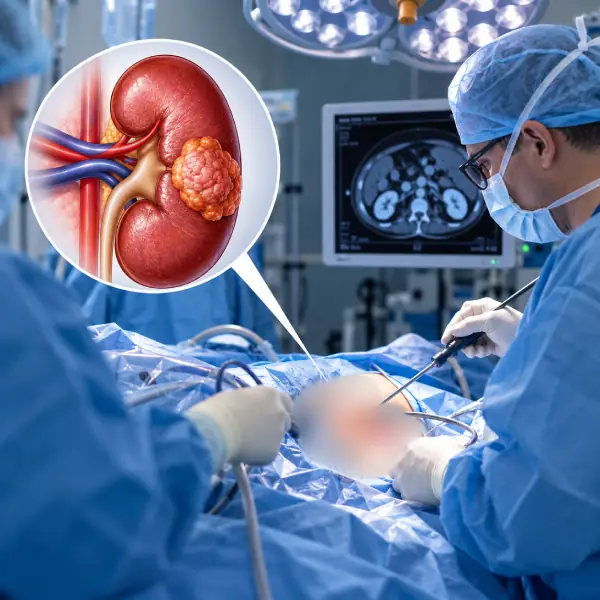
No, surgery for a kidney tumour does not always mean removing the whole kidney. In suitable patients, only the part containing the tumour is removed (partial nephrectomy) and the rest of the kidney can be preserved. If the tumour is large, takes up most of the kidney or is in a position where kidney-sparing surgery would not be safe, the whole kidney may need to be removed (radical nephrectomy).
Most patients found to have a kidney tumour ask the same question at their first consultation: "Will my kidney be removed?" The answer is different for every patient.
Is the Whole Kidney Always Removed?
No. For some tumours, only the part containing the tumour is removed and the rest of the kidney is left in place. This operation is called partial nephrectomy. If the whole kidney has to be removed for the tumour to be taken out safely, the operation is called radical nephrectomy.
Which one is done does not depend only on whether the tumour is cancerous. The size and position of the tumour, its relationship to surrounding tissues and your general health are all assessed together.
Why Is It Important to Preserve the Kidney?
The kidneys filter waste from the blood and maintain the balance of fluids and minerals. The aim is therefore to preserve as much working kidney tissue as possible without compromising cancer treatment. The European Association of Urology (EAU) guidelines also recommend kidney-sparing surgery for suitable patients with small, early-stage tumours confined to the kidney.
How Is Only the Tumour Removed?
Kidney-sparing surgery can be performed as open, laparoscopic or robot-assisted surgery. The method is chosen according to the features of the tumour, the patient's condition and the surgeon's assessment.
The diameter of the tumour is not the only deciding factor. Its position within the kidney and its relationship to the major blood vessels and the urinary tract also directly affect the surgical plan.
When Is the Whole Kidney Removed?
Removal of the whole kidney may be considered in the following situations:
- The tumour is large
- It takes up a significant part of the kidney
- Its position makes safe kidney-sparing surgery impossible
In these situations, the guidelines list laparoscopic or robotic radical nephrectomy among the options. Even so, removing the whole kidney is not a standard procedure applied to every patient. The aim is to preserve kidney function as far as possible with a treatment that is safe in terms of cancer control.
Can You Live with One Kidney?
Yes. Many people whose other kidney is healthy live a normal life with one kidney. Regular follow-up is still needed, with blood pressure checks, blood tests of kidney function and urine tests. If you already have kidney disease, high blood pressure or diabetes, the follow-up plan is adjusted accordingly.
Can the Operation Be Done by Keyhole Surgery?
Some operations can be done laparoscopically or with robotic assistance. However, it cannot be said that keyhole surgery is always better for every patient. The size and position of the tumour, previous operations and general health all influence the choice of method. The EAU guidelines also state that partial nephrectomy can be performed as open, laparoscopic or robot-assisted surgery.
Follow-up After Surgery
Follow-up remains part of the treatment after the tumour has been removed. Pathological examination of the removed tissue shows the type and stage of the tumour, and the follow-up schedule is based on this result and your level of risk.
In short, rather than focusing only on the question "Will my kidney be removed?", you should discuss with your doctor the size, position and stage of the tumour, the condition of the other kidney and whether kidney-sparing surgery is possible. For all treatment options, see the kidney cancer treatment page.
