


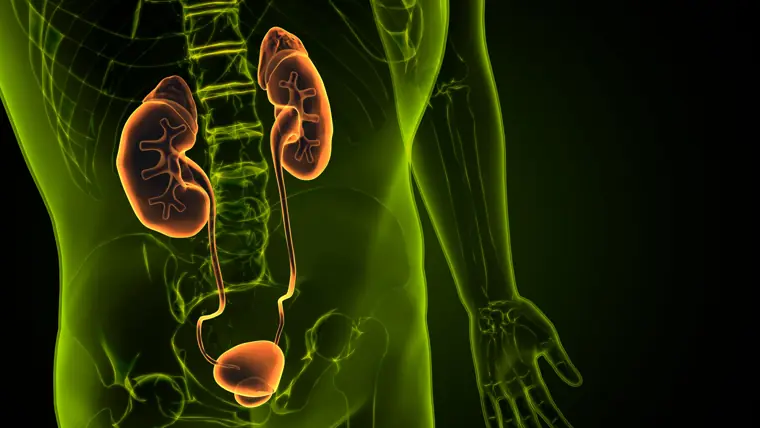
The artificial urinary sphincter is an implant placed entirely inside the body. It is used for moderate to severe stress urinary incontinence, particularly when it develops after prostate surgery. It keeps the urethra closed in a controlled way; when you want to pass urine, you press a small pump to open the system for a short time.
After surgery for prostate cancer or benign prostatic enlargement, the sphincter muscle that holds urine in does not work well enough in some patients. Mild leakage usually improves with exercises and time. For persistent, severe incontinence, the artificial urinary sphincter is one of the effective options.
How Does the Artificial Urinary Sphincter Work?
The device is a closed hydraulic system made up of three parts. It needs no battery or electricity and cannot be seen from the outside.
- Cuff: placed around the urethra to keep it closed.
- Pump: in men, placed inside the scrotum. When you press the pump, the cuff relaxes and you can pass urine.
- Pressure-regulating balloon: balances the pressure in the system. A few minutes after you have passed urine, fluid returns to the cuff and the urethra closes again.
Who Is It Suitable For?
- Men with moderate or severe, persistent urinary incontinence after prostate surgery
- Patients with permanent loss of function in the sphincter muscle
- Suitable patients who have not had enough benefit from other treatments, and some selected female patients
- People with the manual dexterity and cognitive ability to use the pump
If there is an active urinary tract infection or an untreated urethral stricture, these problems are treated first. Suitability is decided after an examination, cystoscopy and, if needed, urodynamic testing.
The Treatment Process
- Assessment: the type and severity of incontinence are established through your symptoms, an examination and tests.
- Surgery: performed under general or regional anaesthesia and usually takes 1–2 hours.
- Recovery: the device is kept deactivated for the first few weeks so that the tissues can heal.
- Activation: the device is usually activated at the practice after 4–6 weeks, and you are shown how to use it.
- Follow-up: regular check-ups monitor how the device is working and your bladder control.
Risks
As with any operation, infection can occur. In addition, the cuff can wear into the urethra (erosion), or a mechanical fault can develop over the years; in these cases the device may need to be replaced or further surgery may be required. Possible risks and expectations are discussed in detail before surgery.
Detailed information on the artificial urinary sphincter: yapayurinersfinkter.com →
Frequently asked questions
Can the device be seen from the outside?
Can it be used straight after surgery?
Is it a permanent solution?
How long does artificial urinary sphincter surgery take?
Can I have an MRI scan after an artificial urinary sphincter has been fitted?
Can a catheter be inserted while I have an artificial urinary sphincter?
Last updated:
